

Don’t Assume They Got It Right
Luke Nichter — a Hoover Institution Griffin Fellow and Presidential Studies chair at Chapman University — on Washington archives, court fights over Watergate’s records, and history's importance.

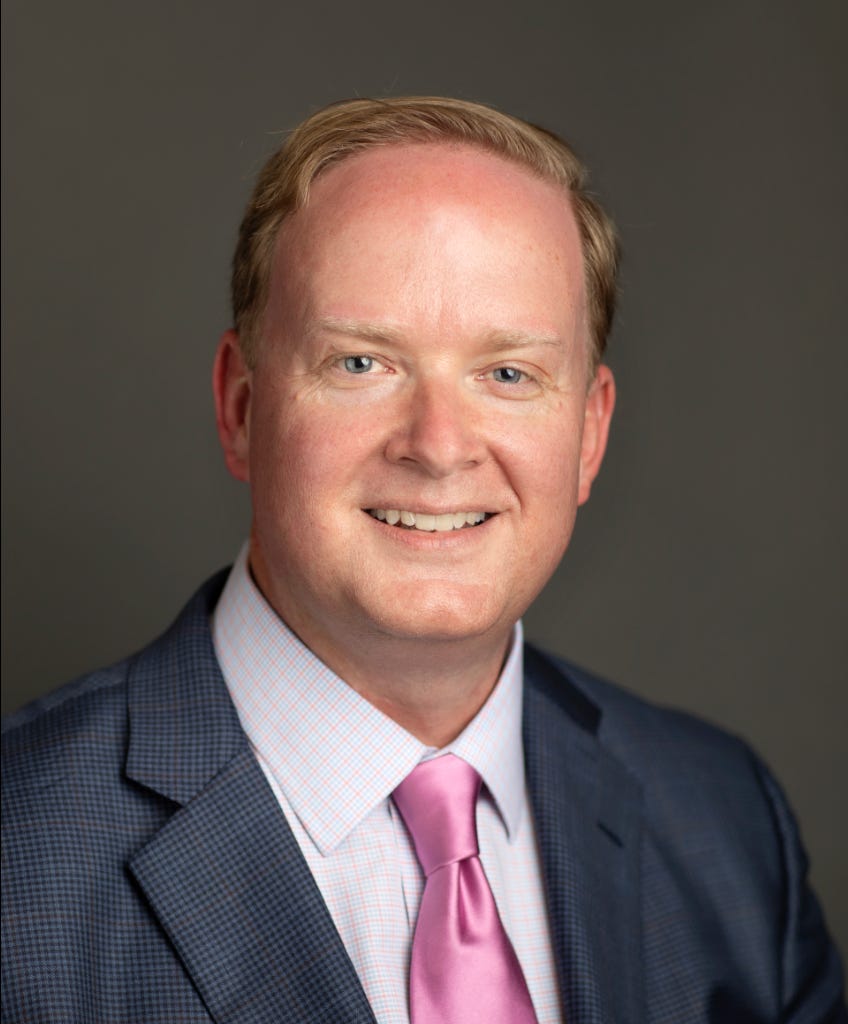
Luke Nichter, the James H. Cavanaugh Endowed Chair in Presidential Studies at Chapman University and a Griffin Fellow at the Hoover Institution. Photo courtesy of the Hoover Institution.
In July 2024, a sitting Democratic president abandoned his reelection campaign under pressure that came not from Republicans but from his own party, handing the nomination to a vice president who could neither run on his record nor run away from it. Luke Nichter had published the book on that situation a year earlier. He set it in 1968.
Nichter’s account of the Humphrey–Nixon–Wallace race argues that Lyndon Johnson did not leave the story when he withdrew from it in March, and that his private ambivalence about his own vice president helped decide the election. It is a contested claim, and he reached it the way he reaches most things: by going back to the records and finding that the accepted version rests on footnotes that dissolve when you follow them. That method has taken him through Nixon’s White House tapes, into a federal courthouse to pry loose sealed Watergate material, and across eighty-five interviews with the children and staffers of the men who ran in 1968.
This interview was conducted by video in July 2026 and has been edited for length and clarity.
From Westminster to the Archives
Benjamin Wolf: Before you became a historian of presidents and the Cold War, what did you imagine your career would look like? What first convinced you that history could become your life’s work?
Luke Nichter: I didn’t know what I didn’t know.
I grew up as a blue-collar kid in the Midwest. I was a first-generation college graduate, and my parents were postal workers. It is a story shared by many first-generation students: if you asked us what our lives were going to look like, we had no more of a clue than anyone else. When you look back, everything appears linear. A led to B, and B led to C. But when you’re living through it, you’re in the eye of the storm, and you don’t know what comes next.
I finished my undergraduate degree with no real idea of what I wanted to be when I grew up. In some ways, I still don’t know how to answer that question. So I went looking for a job in Washington, and like a lot of people, I got bitten by the bug of politics. I started in my early twenties working in the Speaker’s office and then for another committee in the House.
Through some connections, I eventually had a similar experience in the British government. I worked for a member of Parliament and for a minister in Tony Blair’s second government. At the beginning of the Iraq War, that minister was transferred from European affairs to Near Eastern affairs, which was the issue everyone wanted to work on at the time.
Westminster felt like it was under siege. Going to work on the Tube felt like passing through a siege. On February 15, 2003, roughly a million protesters gathered around Westminster.
Editor’s note: Estimates of the February 15, 2003, London march varied widely — police put the crowd near 750,000, organizers at closer to two million.
After a few years of that, I began asking myself what I actually wanted to do. Politics in the moment was fun, but it was tiring. I wasn’t one of those political animals who consumed it twenty-four hours a day.
Then it dawned on me that there was such a thing as political history. You could still engage with politics and recent history, try to learn from them, and apply those lessons to present-day problems. Eventually I realized political history was a closer fit for who I was.
Why 1968 Kept Coming Back
BW: You went from doing politics to studying it, and you are now a Griffin Fellow in the Hoover Institution’s Applied History Working Group. What does “applied history” mean in practice? How would a policymaker use a rigorous history of 1968 differently from a conventional think-tank memorandum?
LN: Most historians would agree that history does not repeat itself. Some people say it rhymes. I’m not even sure it does that.
But history can still be useful. It can be a companion for understanding the present. Let me give you a specific example instead of speaking in the abstract.
When my book about 1968 came out in 2023, it received attention. Usually the first year is a book’s best year, and interest declines from there. My experience was different. The interest followed something closer to a U-shape: it declined after the first year, as expected, and then rose again in 2024. The second wave may have been larger than the first.
The reason was that 1968 featured an unpopular, moderate Democratic president who probably wanted to run again but was torn about the decision. The country was fighting an unpopular war. A critical mass of Americans had lost faith in government at every level, the national political parties, the press, higher education, and other institutions. Young people were asserting themselves differently from their parents’ generation. The United States faced turbulence in the Middle East, economic instability, and anxiety over inflation.
Much of that also described 2024.
As 1968 unfolded, Lyndon Johnson became the last president to be forced from his party’s ticket while seeking reelection. The pressure did not primarily come from predictable Republican opponents. It came from within his own party, particularly from its left wing, which had had enough of Johnson and was aggressively reasserting itself.
History did not literally repeat itself. On March 31, 2024, President Biden did not go on television and withdraw in the same dramatic fashion as Johnson. But he did withdraw from the race in July after planning, as far as we know, to run for reelection. We will not have the full records surrounding that decision for decades. But we know Biden did not step aside because of pressure from Republicans. The decisive pressure came from within his own party.
The people were different. The policies were different. The country had changed tremendously. But 1968 was still a useful vehicle for understanding what was happening.
I told friends in the press what to watch for next. Kamala Harris would not want a repeat of the chaotic Democratic convention in Chicago in 1968. Democrats would want to calm the situation and anoint her in advance rather than risk an open convention fight.
Harris also faced a dilemma similar to Hubert Humphrey’s. She needed to establish her own identity and policies, but she was still the sitting vice president. Unless she resigned, she remained connected to Joe Biden. Like Humphrey, she owed much of her political position to the president she served, which made it difficult to adopt fully independent positions or openly break with him, as some people suggested.
None of these analogies was perfect. But they were useful enough to help anticipate what was coming. I was astonished as 2024 unfolded that many journalists covering the campaign — and even many historians who had written about 1968 — did not know the history well enough to draw those comparisons.
That is what applied history can offer. It does not give policymakers a mechanical answer or prove that the same outcome will occur. It identifies patterns, constraints, and recurring dilemmas that sharpen judgment.
We often hear that this is the most divided the United States has ever been. People ask how we escape the impasse. I’m not a hopeless optimist, but I remember something Nixon’s longtime speechwriter Ray Price once said: the 1860s were an actual civil war; the 1960s were a proxy civil war.
As a people, we have been here before. One lesson from the chaotic and disorderly 1960s is that we emerged from them. We did so together, and the country eventually returned to something more normal. When you know the patterns — while recognizing that no analogy is perfect — history becomes an enormously helpful companion the next time you face a storm.
Finding the Archival Frontier
BW: You have built your career around the “long 1960s,” from John F. Kennedy through Watergate. What pulled you into that era rather than, say, the New Deal or the Reagan years?
LN: I wish I had an eloquent, polished answer. For me, it began with a deadline.
Every graduate student eventually reaches the moment when they have to choose a dissertation topic. You don’t necessarily realize that a decision made hastily against a deadline can define who you are. It determines who serves on your committee and which jobs you can apply for. For a historian, the dissertation often becomes the first book, so that choice can shape the first decade of your career and the tenure process. I understand now how important those decisions were. At the time, I had no idea.
My adviser gave me one of the best pieces of academic advice I have ever received: choose something along the archival frontier.
That is a fancy way of saying you should study something whose records have only recently become available. It once took roughly thirty years for everyone involved to be gone, for the secrets to lose their sensitivity, and for the records to open. As government secrecy has grown, it can now take fifty years or longer. Intelligence records can remain protected for seventy-five years or more.
What qualifies as the frontier is therefore a moving target. If you turned the clock back thirty or forty years from when I was in graduate school, it placed me in the late 1960s and early 1970s.
But when I wandered through the stacks of a major library, it was bewildering. My intellectual heroes had written books four or six inches thick. I saw all these shelves about the 1960s, Vietnam, Watergate, China, détente, and almost every other aspect of the Cold War. I thought, “How could I possibly have anything to add?”
What changed my perspective was listening to the White House tapes, particularly Nixon’s.
Day after day, I heard things on the recordings that conflicted with what I had read in books written by those same heroes. It dawned on me that maybe they had not gotten everything right. When you hear policymakers themselves discussing how the trip to China unfolded, or the sequencing of decisions that ended American military involvement in Vietnam, it offers a powerfully different perspective.
I came to a conclusion that has stayed with me ever since: a lot of important history books are not necessarily based on rigorous research. They are based on something else, and I don’t always know what that something else is.
I can’t imagine ever leaving that period, or needing to. The taped evidence is extraordinarily powerful, and the culture wars of the 1960s still resonate today. If Washington gave me the first bite of the bug, the long 1960s gave me the second.
What Walter Mondale Revealed About 1968
BW: In researching The Year That Broke Politics, you interviewed roughly eighty-five former staffers and family members from the Johnson, Humphrey, Nixon, and Wallace camps. Was there one interview that overturned something you thought you already understood?
LN: There was more than one.
These were people I had grown up hearing about: Johnson’s two daughters, George Wallace Jr., Hubert Humphrey III. When you speak with people who have carried names like those for their entire lives, you remain conscious of the history sitting across from you.
My greatest challenge was moving them away from the stories they had told many times before. Today you can look someone up and hear the same anecdotes repeated across interviews. My goal was to move them onto fresh ground. That is especially important with 1968, where there are mountains of books about the decade, the election, and Vietnam. All my books examine subjects written about many times before me, and the difficulty is that the story is deeply ingrained in American culture — and in you. You learned it a particular way. How do you reach a different conclusion?
The interview that challenged me more than any other was with former Vice President Walter Mondale.
At the time of the 1968 election he was Senator Mondale. He was close to Hubert Humphrey and occupied Humphrey’s former Senate seat from Minnesota. They came from the same part of the country.
We met at his law firm in Minneapolis. I had just flown in from Texas, and I think the pilot announced that it was six degrees when we landed. That is pretty cold for someone arriving from Texas.
Mondale was affable, friendly, and warm. I remember thinking that if more of the country had seen that version of him in 1984, he might have become president.
At the very end of our conversation, he said something like, “Do you want to know what I really think about 1968?”
I said, “Of course.”
I asked whether he believed Lyndon Johnson wanted his own vice president to win.
For most people that is a no-brainer. Johnson and Humphrey were members of the same party. Humphrey was a protégé. They had worked closely together in the White House and previously in the Senate, where Johnson had helped Humphrey’s career during his own years in leadership. Their association stretched back long before Humphrey became vice president.
But over the years I had picked up hints in books that raised doubts about whether Johnson truly supported him. I wanted to ask Mondale directly.
He answered without hesitation: “Absolutely not. Absolutely not.”
I was not expecting that. I’m a historian, not a professional interviewer. I tend to think we are simply having a conversation. In that moment, I wasn’t sure how to follow up.
I also learned that an interviewer cannot immediately rescue someone from an uncomfortable moment. Sometimes you have to let the silence breathe.
I waited a few seconds and asked, “What do you mean? Do you think President Johnson wanted his nemesis, Richard Nixon, to win?”
Mondale paused. We were sitting across from each other at a long law-firm conference table. He looked away, then looked back at me and said, “Maybe.”
It wasn’t definitive. But I had never heard anyone at that level question fifty years of accepted history about the election.
Editor’s note: Nichter’s reading of Johnson’s intentions is contested. Other historians of 1968 have argued that Johnson’s coolness toward Humphrey reflected frustration over Vietnam policy rather than any preference for Nixon, and a recollection offered nearly fifty years after the fact carries the ordinary limits of oral history. Nichter lays out the documentary case in The Year That Broke Politics.
Mondale challenged me, from an early stage of the book, to focus closely on Johnson’s mindset.
Most accounts move Johnson out of the center of the story after March 31, when he withdrew from the race. The spotlight turns to the candidates seeking to succeed him — Humphrey, Nixon, Wallace, Eugene McCarthy — or to the other extraordinary events of the year.
Mondale suggested that Johnson remained central. If anything, Johnson worked even harder after he withdrew. His objective had changed. He was no longer trying to secure his own reelection; he was trying to influence the choice of his successor.
So much of Johnson’s presidency remained incomplete. He would be handing unfinished policies to whoever entered the Oval Office next, and that person would have enormous power to shape his legacy.
That interview fundamentally changed the direction of my research. More than any other conversation, it produced the book readers ultimately saw.
How the First Draft Becomes the Final Story
BW: You are describing an established narrative that remained largely intact for half a century. Why did that interpretation of 1968 become so fixed? Was it because journalists wrote the first draft, or was there something about the story itself that made it resistant to revision?
LN: I don’t think the problem is unique to 1968 or even to presidential elections.
Journalists write the first draft of history. During a campaign, a reporter might be assigned to one candidate or several. Once the election is over, the reporter assembles campaign notes, adds some retrospective analysis, and publishes a book as quickly as possible.
That was essentially Theodore White’s formula for The Making of the President series covering 1960, 1964, 1968, and 1972. He produced those books extraordinarily quickly, often by the summer after the election.
Then people assume: how much better could I possibly do? White was there. He covered the campaign.
Those first books are necessarily incomplete. They are written on imperfect timetables with imperfect information. But they are not easily refuted.
Then come the social scientists, political scientists, and eventually historians to do the mopping up. Even when they challenge portions of the early narrative using newly declassified evidence, they often fit that evidence within the outline that already exists. The original authors knew what they knew, but they did not know what they did not know.
Once a narrative becomes established, the broader public grows comfortable with it, even when the story has partisan implications.
Take Watergate. Nixon won more than 60 percent of the popular vote in a 1972 landslide. Within roughly nine months, he was underwater in public-opinion polls. That was a dramatic reversal. And it was not only Democrats and journalists who became comfortable with the standard Watergate narrative. Many Republicans did, too. They would say something like, “He did some wonderful things, but he was deeply flawed.”
We grow comfortable with a narrative and assume the experts completed a thorough investigation.
My perspective today is almost the reverse. The more books I see about a subject, the less confidence I sometimes have that the underlying history has been fully tested.
Anyone who loves history will recognize the diminishing returns. The first book you read about a subject is exciting because everything is new. By the tenth, you are learning less from each additional volume, and many appear to be repeating the same stories. The repetition becomes so complete that a book feels deficient if it leaves out one of the familiar anecdotes.
When you follow the footnotes, however, the books frequently refer to one another. They may all lead back to the original proto-history — the first draft of the story.
No one stops to think, “I need to go back and check the records. I need to spend a month sitting in an archive. How do I know the earlier author transcribed that quotation correctly?”
People assume the history has been crowdsourced and must be mostly right. But when you trace some of those footnotes back to their origin, they vanish like a mirage in the desert.
That does not mean the earlier historians got everything wrong. But the original sources can tell a considerably different story.
So I tell my students: don’t assume they got it right. Even if the authors are your intellectual heroes, even if they are beautiful writers and storytellers, look over their shoulders and inspect the original sources. You will almost always find something different or incomplete. Sometimes the explanation is as innocuous as the release of new evidence since the book was written.
There is enormous value in checking the source, because conventional wisdom is often not very wise.
Taking Watergate’s Secrets to Court
BW: In 2009 you set out to open still-secret Watergate records. Walk me through the mechanics of bringing that petition. How did you know that action needed to be taken, and what convinced you the records might actually be obtainable?
LN: As stakeholders in a democratic system, we all have rights — and, I would argue, obligations — to hold public officials accountable. They are operating, in whole or in part, with taxpayer funding.
We therefore have certain tools. For a historian, one of those is the Freedom of Information Act. You can submit a request to a federal agency and ask for records. It doesn’t always work. The records might not exist, or an agency might withhold or heavily redact them. But when there is a disagreement, you have administrative rights. You can appeal, and in exceptional cases, disputes over FOIA are ultimately decided through litigation.
I’m not an attorney, but my work in this area abuts the law.
In my case, I was interested in why so many Watergate records remained closed.
I sometimes joke with my students that my goal is not to turn them into conspiracy theorists by the end of the semester. But conspiracy theories sometimes begin in a perfectly ordinary place: the official explanation is obviously incomplete.
Watergate may still be the largest FBI investigation in American history, although investigations such as September 11 may eventually overtake it once those records are available. Most people assume we have learned everything there is to know, particularly about Nixon. He was the first president to resign. He left in disgrace and accepted a pardon. To many people, the logic is simple: if he accepted a pardon, he must have been guilty of something.
Yet all these records were still closed.
I now believe there are several million pages of unreleased Watergate records, most of them grand-jury material. There are also several hundred hours of Nixon’s tapes that have never been released — more than Kennedy recorded in his entire presidency and almost as much as Johnson recorded in his.
I kept asking: why? Who is being protected? Whose interests are being served?
I happened to notice that the federal district court in Washington had a historical society, and that it had recently held an event connected to a Watergate anniversary. I wrote to the society, explained my interest in the closed records, and asked what the court was doing to preserve and open its historical record. I was grasping at straws and following every lead I could find.
The society did not have much to add, but it said it would refer my letter to the court’s chief judge, Royce Lamberth. Judge Lamberth held the same institutional position John Sirica had held during Watergate: chief judge of the U.S. District Court for the District of Columbia.
We began exchanging letters, some of which can now be found online. At a certain point, I wasn’t sure where the correspondence was leading.
Judge Lamberth eventually said, in effect, “You’ve raised some interesting questions about these records. If you would like, I could construe our correspondence as a petition before the court.”
A petition is not adversarial in quite the same way litigation is. It sounds like something the Founders might have done: you go to Washington, represent yourself, and petition the government. The judge said he could officially docket the correspondence as a petition. He also offered to waive the filing fees. I thought that sounded terrific.
The process continued for several years. Judge Lamberth was a tremendous advocate for opening the records. I would have liked to have accomplished more, particularly with the grand-jury materials, many of which remain secret today.
But the experience demonstrated that even a kid with a background like mine, with some help and good timing, could represent himself against the Justice Department’s Civil Division and do something useful for American history.
More Information, More Secrecy, More Noise
BW: You have spent much of your career prying open institutions that would prefer to remain closed. Has that work become harder or easier over the past fifteen years?
LN: You don’t have to be as cynical about machine politics as I am to believe that tools such as the Freedom of Information Act work in two directions. The procedures can be used to deny access just as they can be used to enable it.
I do think the work has become more difficult. At the same time, we have more information than ever before — and more noise preventing us from using it well than ever before.
The most important advice I would give — not only to aspiring historians or people who might someday file a FOIA request, but to everyone — is that we need to become better fact-checkers of ourselves.
Every week our news feeds inundate us with information and force us to reach quick conclusions. This is not a partisan statement; I generally avoid making partisan statements. The analysis we reach in the moment will inevitably be incomplete. It may also be completely wrong.
I tell my students that it has taken fifty years for us to develop a better frame of reference for the 1960s. It may take another fifty before historians can properly understand the period we are living through now.
If you look at the presidents from Kennedy through Carter, not a single one’s political future unfolded exactly as planned. They left the stage for very different reasons over roughly twenty years. You can see something similar in the more recent period. How long will the current turbulence continue? Will it last as long as the upheaval of the 1960s?
One day, historians who lived through neither period may compare them and offer an elegant analysis. That is the necessary work of historians, even though it is also necessarily flawed.
When you understand history well, I think it makes you a better citizen. It cannot tell you precisely what is coming next, but it can bring the national temperature down. We need that badly.
“Do Something Interesting”
BW: What would you tell yourself as an undergraduate? What do you wish you had understood earlier about finding your interests and building a career?
LN: When you write a book, you begin by trying to answer certain questions. Along the way you discover many others you simply don’t have time to answer. If you are honest with yourself and your readers, you leave a great deal on the table for other people to pick up later.
The line I come back to is from Henry Cabot Lodge Jr. When I became the first historian to examine his papers carefully, I found something he had written that still resonates. This is the time of year when students graduate and ask, “What do I do next?”
I tell them what Lodge said: when you are in your twenties, it does not matter exactly what you do. Just do something interesting.
Try many different things. Doing interesting things in your twenties will prepare you to do serious things in your thirties.
The more general lesson, whether you are interested in history, academia, or a completely different career, is to develop the self-confidence to ask questions no one else has asked. That might mean reading more deeply into a body of literature than anyone before you. It might mean spending more time in an archive than anyone else.
It was sometimes said of Daniel Patrick Moynihan — a fascinating figure who helped create Johnson’s War on Poverty, worked in the Nixon White House, and later became a liberal lion of the Senate — that he looked at the same data as everyone else but reached different conclusions.
That is a great goal to have in life.
Whatever you do, do it boldly. When you interview someone who has been interviewed ten thousand times, ask the question that person has never heard. Move them toward a story they have never told.
If you do those things, you will stand out and you will go far.
You may not always make a lot of friends, but you will go very far.
About the guest: Luke A. Nichter is the James H. Cavanaugh Endowed Chair in Presidential Studies at Chapman University, a Griffin Fellow at the Hoover Institution at Stanford University, and a member of the State Department’s Historical Advisory Committee. He specializes in the Cold War, the modern presidency, and U.S. political and diplomatic history, with a particular focus on the long 1960s. He is the author or editor of numerous books, including The Year That Broke Politics — named a Wall Street Journal Best Book of 2023 in politics — The Last Brahmin, and the two-volume Nixon Tapes series co-edited with Douglas Brinkley.
About The Pathway Review: The Pathway Review is an independent, nonpartisan interview publication about public life and the people who help shape it. It publishes long-form conversations with public officials, journalists, scholars, diplomats, policy practitioners, and other professionals about the work they do and the path that brought them there.