

Bret Stephens on Opinion Writing, Intellectual Curiosity, and Building a Journalism Career
Bret Stephens is a Pulitzer Prize–winning opinion columnist for The New York Times and a former foreign-affairs columnist and deputy editorial page editor at The Wall Street Journal.

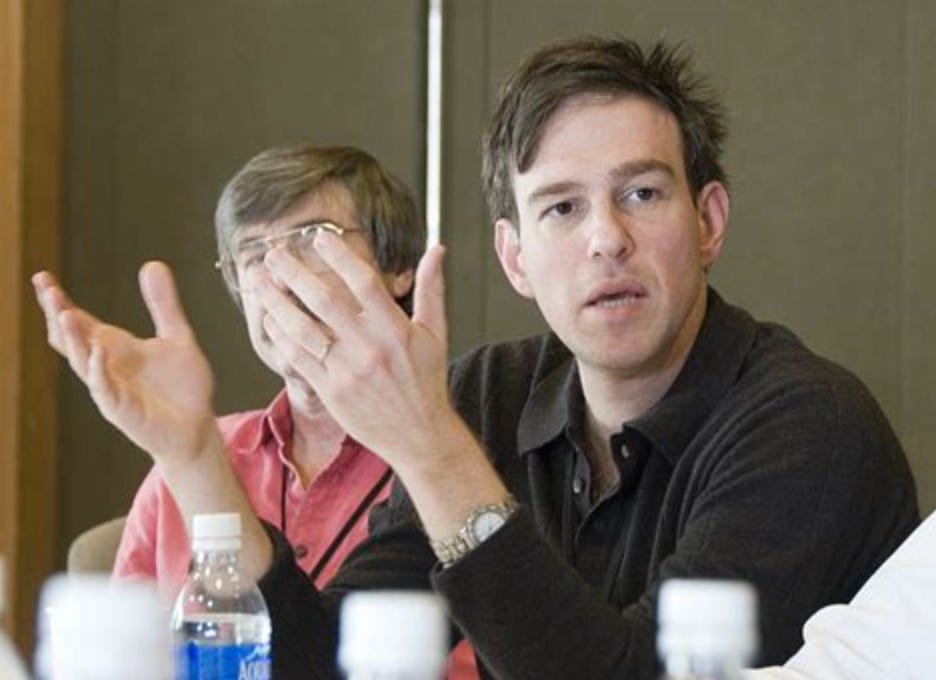
Bret Stephens at a discussion in 2008. Photo: Christopher Michel / Wikimedia Commons, CC BY 2.0.
Bret Stephens did not discover journalism in a graduate seminar or a newsroom fellowship. He found it in high school, by starting an alternative student paper because the official one bored him. That instinct—to argue, provoke, and resist consensus—never really left.
Stephens has since built a career around opinion writing at the highest level: at The Wall Street Journal, where his “Global View” column won the Pulitzer Prize, and now at The New York Times, where he is often a dissenting conservative voice in a liberal institution. But his advice to young journalists is less glamorous than the job sounds. Don’t rush to journalism school. Learn languages. Read history. Stock your mind before trying to tell readers what to think.
This first part of our conversation is about how a columnist is made: not by having takes, but by developing taste, knowledge, judgment, and a willingness to keep learning even after people start calling you an expert.
This interview has been edited for clarity and length.
From the Archive · originally published in The Pathway Blog, December 2024.
Discovering journalism
Benjamin Wolf: Thank you so much for speaking with me, Mr. Stephens. To start, what inspired you to pursue a career in journalism?
Bret Stephens: It started in high school.
I launched a very contrarian alternative student newspaper because I didn’t care for the official paper, which I found dull. That little project turned out to be the most interesting thing I did in high school.
There’s a funny twist to the story: the editor of the mainstream student paper, who was a few years ahead of me, is now the editor in chief of The New York Times, Joe Kahn. So both of us, in our own ways, ended up where we probably belonged. High school journalism was the direct path to everything that followed.
What makes a good opinion writer
BW: I work on my school newspaper too, though mine is the mainstream one, not the contrarian one. For students thinking about opinion writing, what skills or qualities matter most, and how can we develop them?
BS: I’d highlight three things.
First, you have to be an opinionated person. Not everyone is, and that’s fine. Some people are naturally hesitant to offer strong views. They’re more comfortable just reporting facts. But to write opinion, you need to know that you yourself are someone with strong, considered views.
Second, you need a lot of information at your disposal. I often compare writing a column to cooking a meal. You need a well-stocked pantry, your long-term knowledge of history, ideas, and context, and a well-stocked fridge, the current news, the “perishables.” Good opinion writing is combining those in a way readers find nourishing.
Third, there’s the craft of writing itself. I call it a craft rather than an art because it’s something an intelligent person can learn through practice. The best way to learn is by reading great writers and imitating them. Over time, in the gap between your imitation and the original, you begin to discover your own voice.
BW: Who were the writers you tried to imitate when you were younger?
BS: In high school, the big one for me was George Will.
I admired his style and substance. He was conservative, and I was a young conservative, so I agreed with many of his views. But more than that, he wasn’t a cookie-cutter partisan. He could surprise you. That independence was very appealing.
But before George Will, there was my father. My dad had a business career but wrote a column on the side for our hometown paper in Mexico City. On Saturdays, when his column appeared, we’d go to the kiosk to buy the paper. Seeing his words in print, watching them spark conversations and arguments, that feeling made a huge impression on me.
On journalism school: do not go
BW: With journalism changing so quickly, and everything being accessible online, do you think journalism school is still important? What educational path would you recommend for aspiring opinion writers?
BS: My short answer: the biggest mistake a young journalist can make is going to journalism school.
I think it’s a waste of money and, more importantly, a waste of time. I’ve hired many journalists, and I don’t think any of them had journalism degrees. If anything, I’d be suspicious of someone who did.
What you need instead is a combination of habits, skills, and knowledge. If you want to be a foreign correspondent, learn a tough language, Mandarin, Arabic, Russian. Read widely, not just news but literature and history. Build a dense mental map so that when someone mentions 1948, 1956, or 1967 in the Middle East, those dates mean something to you.
You can’t connect the dots if you don’t know where the dots are. A lot of young journalists simply don’t have enough in their heads, no shared historical or cultural references with the people they’re covering. That, to me, is a much bigger problem than not having a journalism credential.
Seeing America from abroad
BW: You’ve written extensively about the Middle East. Last time we talked, you mentioned traveling to Gaza and how that hands-on experience shaped your perspective. How has time in the region informed your analysis compared to journalists who cover it mostly from afar?
BS: Direct experience changes everything.
I’ve built deep relationships with people in many regions. Just today, for example, I spent a few hours driving to pick up my daughter from school and used that time to have long calls with sources in the Middle East. That kind of ongoing conversation gives you insight you’ll never get from simply reading other people’s reporting.
Even if you plan to cover local issues, I think every journalist benefits from leaving the country. Living abroad lets you see America in a new light. I learned a tremendous amount about the United States from my years in Mexico because that outsider vantage point makes you notice what residents take for granted.
Staying a student, even as an expert
BW: As a student, I sometimes worry about not knowing enough to write about big issues. How do you handle writing on topics you’re still learning about? Do you wait until you fully understand something before you publish?
BS: A thoughtful person never stops being a student. You don’t age out of that.
Even as someone seen as an expert, you should be constantly learning and open to surprise. The danger is thinking you know everything you need to know. I try very hard to resist that.
From time to time, you realize you’ve been wrong. The right response is to say so. Having a column means you’re in an ongoing conversation with readers. You owe it to them to be candid. In a recent piece titled “Done With Never Trump,” I wrote about rethinking aspects of my stance toward the Trump presidency. Some readers were furious; others appreciated the honesty. That’s how it should be.
Being a conservative at a liberal paper
BW: You’ve sometimes clashed with other Times columnists. How do those internal disagreements shape the opinion section? And what is it like being a more conservative writer in a largely liberal newsroom?
BS: We try not to have public feuds, but of course there are disagreements. That’s by design.
The editors who hired me knew I wouldn’t line up with many of my colleagues. That was the point: they wanted ideological diversity. There have been a few moments where clashes have been more visible, but those are the exception, not the rule.
Do I feel like a minority at the paper? Sure, but that’s not a surprise. I knew what I was signing up for. And there are upsides. Sometimes it’s an advantage to be the dissenting voice; people may pay more attention, whether they agree or not. I’ve chosen this role, and I’m glad to be where I am.
Breaking in and moving up
BW: On a personal note, journalism is something I’m seriously considering. Say I follow the path you suggest, study history or a language, read widely, develop a knowledge base. What comes next? Is it just applying to smaller jobs and working my way up, or is there a more specific path?
BS: There really isn’t a single beaten path, especially in opinion journalism with a foreign policy focus. There might be a couple dozen jobs like that in the entire country.
People arrive there by very individual routes. In my case, I grew up abroad, which gave me a distinctive background. I had a strong interest in journalism from high school onward. I read voraciously and stayed open to unusual opportunities.
So my advice is: build deep knowledge, write constantly, and be willing to take the less conventional path if it gets you closer to the work you want to do. There’s no rigid ladder, but there are lots of ways up.
BW: Thank you so much for taking the time. I really appreciate it, and I know our readers will too.
BS: Thanks for having me. And keep writing.
About the guest: Bret Stephens is a Pulitzer Prize–winning opinion columnist for The New York Times, where he writes on foreign policy, domestic politics, and culture. He previously served as foreign-affairs columnist and deputy editorial page editor at The Wall Street Journal, editor in chief of The Jerusalem Post, and editor in chief of SAPIR: A Journal of Jewish Conversations.
About The Pathway Review: The Pathway Review publishes long-form interviews with people in politics, policy, journalism, law, diplomacy, markets, and public service about the work they do and the path that brought them there.
Subscribe to receive new interviews in your inbox.
This interview was conducted in December 2024 and has been edited for length and clarity.